LoginTalk to us
HomeContentsGenresWhy EvolveThe StackLiveOpsDTCRetentionOfferwallPrinciplesMetricsTakeaways
AppSamurai for Games

Monetization Playbook

For Casual & Hybrid Casual Games

A 2025–2026 field guide to revenue strategy, LiveOps, ad models, IAP, and emerging channels. Built for game developers, product managers, and monetization leads.

$0B
Total Mobile Game IAP Spend, 2024
Source: Sensor Tower
+0%
Hybrid Casual IAP Revenue Growth, 2024
YoY · Sensor Tower
0%
Of Mobile IAP Revenue Came From LiveOps Games
2024 · Adjust
~0%
Of Top-50 US iOS Grossing Games Run DTC
Nov 2025 · Naavik
Introduction

The Monetization Landscape Has Changed

The mobile gaming industry has matured well past the heyday of hyper-casual, and the rules of monetization have matured with it. The pure ad-based models that once powered chart-topping hyper-casual titles can no longer sustain profitability on their own. A richer, more layered approach has taken their place: one that combines ads, in-app purchases, subscriptions, LiveOps, and, increasingly, direct-to-consumer channels.

Casual and hybrid casual games sit at the center of this shift. They are the genres best positioned to capture the full spectrum of modern monetization: accessible enough to acquire users at scale, engaging enough to convert them into spenders.

This playbook is written for game developers, product managers, and monetization leads working in casual and hybrid casual mobile games. It replaces outdated frameworks with current, data-backed strategies drawn from the latest industry reports and market behavior as of mid-2026.

What's Inside

Monetization Playbook


01
1.0

Understanding the Genre Landscape

Where your game sits determines how it earns

Before designing a monetization strategy, you need to know where your game sits on the genre spectrum. Each genre carries distinct player expectations, session behaviors, and revenue potential.

A spread of popular casual and hybrid casual mobile games representing the genre landscape

1.1 The Game Genre Spectrum

GenreCore TraitsTypical SessionPrimary Revenue
Hyper-CasualOne-tap mechanic, minimal UI, instant action, no meta30–90 seconds90–95% ads
CasualSimple mechanics + meta layers (match-3, puzzle, arcade)5–10 minutes50/50 ads + IAP
Hybrid CasualHyper-casual core + mid-core meta + multi-stream monetization10–25 minutesBalanced IAP + ads + subs
Mid-coreComplex mechanics, progression systems, community features20–45 minutes60–80% IAP

1.2 The Hybrid Casual Formula

Hybrid casual games pair the viral simplicity of hyper-casual with the depth and monetization infrastructure of mid-core titles. The result is a game that acquires users easily and retains them profitably.

+

The Hybrid Casual Recipe

Casual/hyper-casual core game mechanic + mid-core meta layers (narrative, collecting, building, customization) + multi-stream monetization (ads + IAP + subscriptions) = hybrid casual game.

Meta layers are the key differentiator:

Narrative / Storyline

A game universe that creates emotional investment.

Collecting

Completion mechanics that reward long-term engagement.

Decorating / Building

Visible progression tied to the narrative.

Customization

Player identity and attachment.

Game Modes

Variety that prevents repetition fatigue.

Progression Systems

XP, levels, season passes, and achievement ladders.

The Benchmark: Royal Match

Royal Match is the reference example: a globally popular puzzle game with a decoration meta layer, where players earn stars per level to build and upgrade a game-world mansion. That combination of instant puzzle action and visual progression carried it to one of the most-played and highest-grossing titles in mobile gaming history.


02
2.0

Why Monetization Strategy Must Evolve

What broke the hyper-casual model

Hyper-casual built its dominance on massive download volume monetized purely through advertising. Three structural shifts eroded that model’s profitability and reshaped how every casual studio earns.
Casual and hybrid casual mobile game icons illustrating the shift in monetization strategy

Apple's App Tracking Transparency

Introduced with iOS 14.5 in April 2021, ATT requires explicit user permission before tracking activity across apps and websites. Opt-in rates settled well below 50% in most markets, degrading ad-targeting precision, reducing eCPMs, and pushing up user acquisition costs for developers who rely on performance advertising.

Market Saturation

Hyper-casual games were easy to produce, so supply exploded. By 2022 the genre still led global downloads, but its repetitive nature drove engagement down: players churned faster, day-7 and day-30 retention fell, and LTVs stagnated. Publishers like Rollic saw game LTVs drop to ~$0.40 and made a deliberate shift toward $1.00+ LTVs through hybrid approaches.

Ad Revenue Compression

In 2024, publisher-side eCPMs dropped 20–30% while ad networks reported record profits, a structural shift in leverage that hurt studios relying on a single ad revenue stream. Hybrid monetization stopped being merely a growth strategy and became a survival strategy.

Key Insight

Ad monetization alone is no longer a viable foundation for casual game profitability. The studios winning in 2025–2026 treat advertising as one layer in a multi-stream model, not the whole stack.

2.2 The Hybrid Casual Opportunity by the Numbers

The data leaves little room for debate: hybrid casual is the highest-growth segment in mobile gaming.

0%

Download Growth

Hybrid casual, YoY 2024 (Sensor Tower)

0%

IAP Revenue Growth

Hybrid casual, YoY 2024 (Sensor Tower)

$174.8M

App Store Revenue

Hybrid casual, March 2025 alone (Gamigion)

0%+

Casual Market Growth

Projected 2025, reaching $19.4B (Verve/Beresnev)

These numbers describe a genre that has cracked the hard problem of combining broad accessibility with deep monetization. IAP spend growing 37% in a single year (while the broader mobile market grew IAP at just 4%) confirms that hybrid casual isn’t merely growing. It is outperforming every other genre on the revenue dimension that matters most.

🔒

Unlock the Full Monetization Playbook

Continue reading for the complete monetization stack (IAA, IAP, subscriptions, battle passes), the LiveOps engine, direct-to-consumer web stores, retention frameworks, UA strategy, and the metrics that define success.

No spam. Instant access. Unsubscribe anytime.

03
3.0

The Monetization Stack

No single channel is enough

Modern casual and hybrid casual games run a layered monetization stack. The winning framework combines every layer below, tuned to your specific game and player base.
The layered mobile game monetization stack

3.1 In-App Advertising (IAA)

The role of ads in 2025–2026. Even with IAP on the rise, advertising remains the largest monetization channel for casual and hyper-casual games. Its real job: monetizing the 95%+ of players who will never make a purchase, a segment that would otherwise generate zero direct revenue.

Benchmark

82% of players prefer free games with optional ads over paid games, yet 46.8% cite ads as their biggest frustration. Balance and placement are everything. (Business of Apps, 2025)

Ad Formats and Where They Fit

FormatBest Use CasePerformance Notes
Rewarded VideoAfter level fail, at energy depletion, before boss level87% of players view positively; 80–90% completion rate (eMarketer, Apr 2025)
InterstitialBetween natural game breaks (level completion, session restart)Strong CPMs; use sparingly to avoid churn
Playable AdsUA creatives; in-game cross-promotionHigh conversion; best for acquisition funnels
BannerAmbient visibility; low-engagement momentsLowest eCPM but non-intrusive
Native / AudioNarrative and story-driven gamesEmerging formats; non-disruptive; growing eCPMs

Ad Pacing and Segmentation

Top studios in 2025 no longer apply one uniform ad strategy across their whole player base. They segment:

By UA Campaign Type

Players acquired through paid UA and organic players often show different ad sensitivity.

By Lifecycle Stage

New users get lighter ad loads; re-engaged users can support more.

By Spend Propensity

Players who have made IAP purchases should see fewer ads and more purchase offers.

Studios like the team behind Hexa Sort have pioneered UA-campaign-aware monetization logic, where ad frequency and placement adapt based on which channel brought the player in.

Revenue Split Benchmark (2025–2026)

Ads vs. IAP share by genre: bars plot the midpoint of each published range; hybrid casual is drawn as an even split per its “balanced blend” description. Hover for the published figures (Source: Audiencelab, 2026)

Published ranges: hyper-casual 85–95% ads / 5–15% IAP · casual 40–60% ads / 40–60% IAP · hybrid casual: balanced blend, weighted by meta depth · mid-core 20–40% ads / 60–80% IAP.

3.2 In-App Purchases (IAP)

The economics of IAP. Only about 5% of free-to-play players ever make a purchase. The entire IAP model is built to serve that engaged minority while keeping the game accessible and fun for everyone else. Those paying players punch far above their weight: the top 5% of iOS players account for roughly 20% of gaming revenue.

$80.9B

Total Mobile Game IAP Revenue in 2024

Mostly iOS-driven (Sensor Tower)

Core IAP Categories

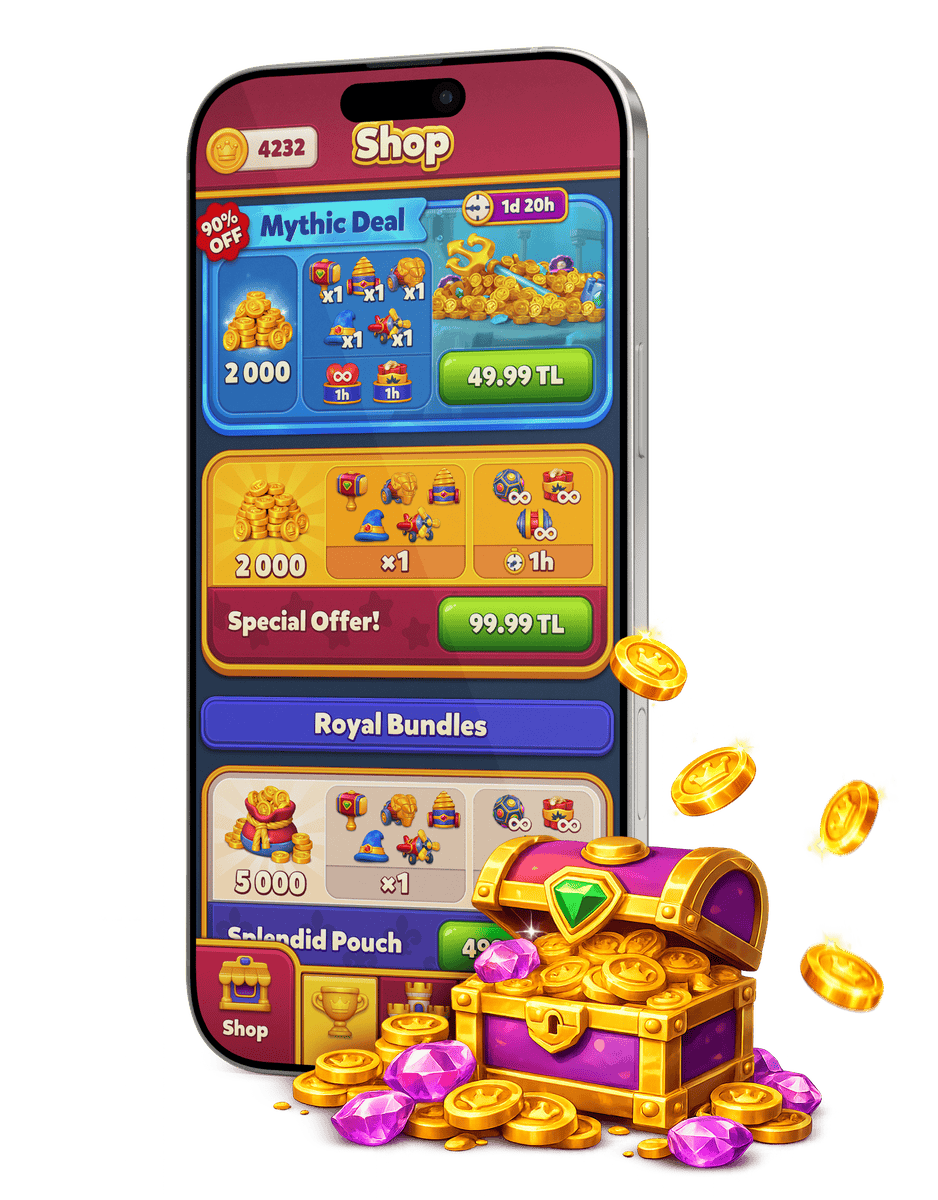
Virtual Currency

The universal in-game economy layer: coins, gems, tokens.

Consumables & Boosters

Power-ups, extra moves, skip-level items.

Lives / Energy Refills

Session extension when players hit natural gates.

Bundles

High-value starter packs and limited-time offers.

Exclusive Unlockables

Characters, skins, game modes.

Cosmetic Customizations

Player identity items that don’t affect game balance.

Battle Passes

Seasonal progression tracks with timed rewards.

Subscriptions

Recurring access to an ad-free experience, bonuses, or premium content.

IAP Conversion: Timing Decides

Contextually-timed IAP offers perform 3–5× better than scheduled promotions. The highest-converting moments:

  • After 2–3 consecutive level failures
  • At energy or life depletion
  • During boss or key-level encounters
  • Immediately after tutorial completion, while motivation is highest
  • During limited-time events (scarcity triggers urgency)
Playbook Tip

Identify your game’s highest-friction moments early in development. These are your primary IAP trigger points. Event-level analytics platforms can measure conversion lift per trigger for ongoing optimization. Teams using this approach report 15–25% ARPU lifts. (SolarEngine, 2026)

Pricing Strategy

Don’t lean on a single price point. An effective IAP ladder includes:

  • Entry-level offers ($0.99–$2.99) to lower the first-purchase barrier
  • Mid-tier bundles ($4.99–$9.99) as the volume driver
  • High-value whale packages ($19.99–$99.99+) for your most engaged spenders
  • Personalized dynamic pricing adapted to regional purchasing power
  • Limited-time discounts refreshed every 7–10 days to maintain urgency without fatigue

3.3 Subscriptions

Subscriptions are the fastest-growing IAP format in mobile gaming, and increasingly viable for casual and hybrid casual titles. They deliver predictable recurring revenue and encourage long-term engagement. What works in a subscription:

  • An ad-free experience, the most universally valued benefit
  • Daily bonus currency or boosters for subscribers
  • Early access to new content, levels, or seasonal events
  • VIP status signals (badges, exclusive cosmetics)

3.4 Battle Passes & Seasonal Content

Popularized by Fortnite and now ubiquitous across mid-core, the battle pass has proven highly effective in hybrid casual games. A well-designed battle pass:

  • Creates a timed progression track players engage with over 4–6 weeks
  • Rewards both free-tier and premium-tier players, keeping non-payers engaged
  • Provides natural IAP upsell moments (unlock tiers, accelerate progress)
  • Drives D7 and D30 retention as players return for daily and weekly missions

Battle passes also work symbiotically with LiveOps: each season becomes a content event that re-energizes the player base and creates urgency around the current pass before it expires.


04
4.0

LiveOps: The Engine of Long-Term Revenue

From launch-and-forget to launch-and-operate

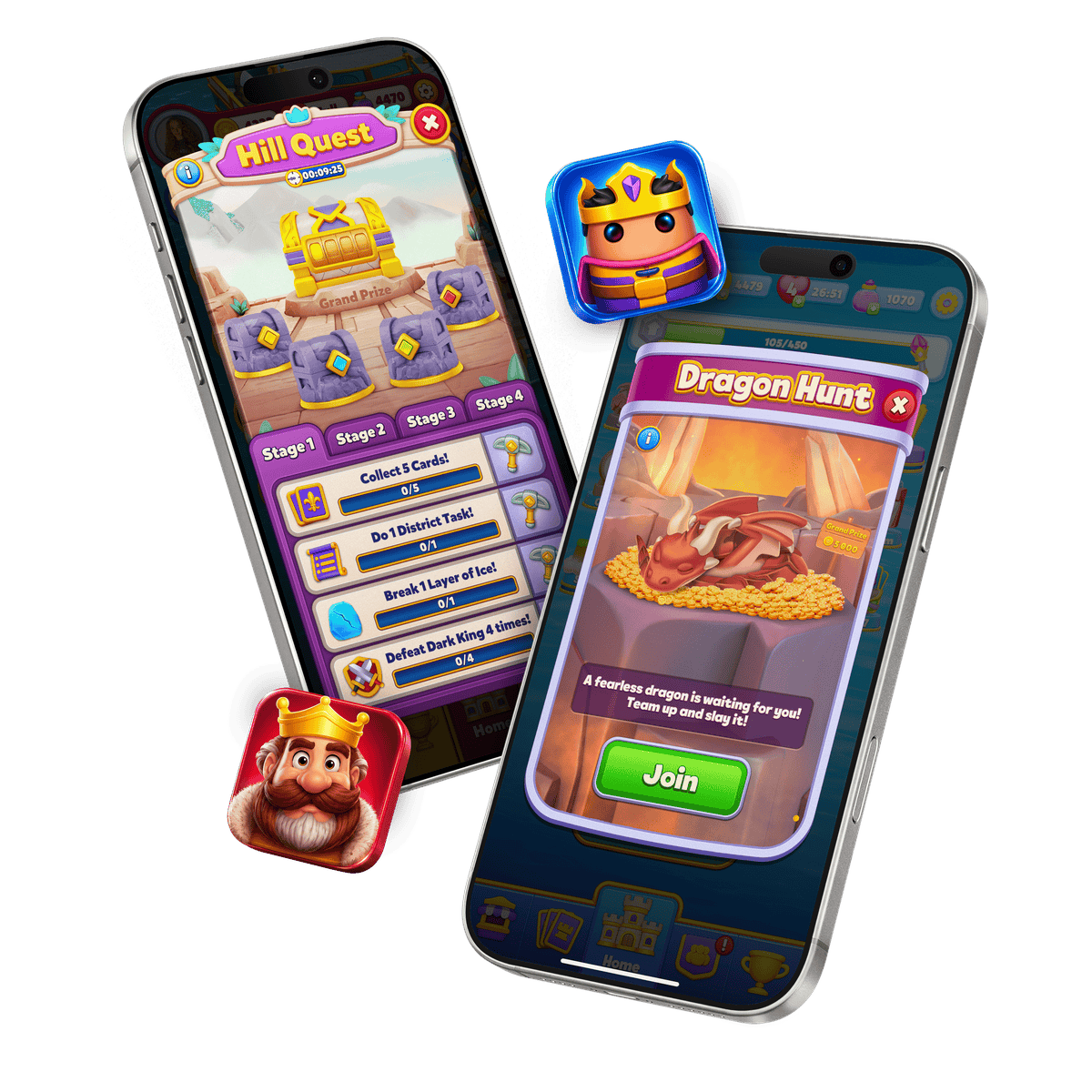
Live Operations is the ongoing process of updating, optimizing, and expanding a game after launch, through real-time content, events, and personalized experiences, with no new app store submission required.
LiveOps-driven casual and hybrid casual mobile games
Industry Benchmark

In 2024, 84% of all mobile IAP revenue came from games using LiveOps, and 95% of studios are now building or maintaining a live service title. (Adjust, 2025)

LiveOps turns a static game into a living product. It matters most in free-to-play ecosystems, where revenue depends on keeping existing players engaged rather than constantly acquiring new ones, a priority that has only intensified as UA costs have risen.

4.2 LiveOps in 2025: What the Data Shows

From GameDesignBites’ analysis of the 2025 mobile landscape:

  • The average number of LiveOps events per month rose from 73 to 89 in 2025
  • Casual games run shorter, more frequent events to monetize quickly before disengagement
  • Mid-core games favor longer events with fewer launches (~76/month)
  • Short-term albums are replacing long-running collection systems
  • Milestone-based progression and repeatable tournaments dominate LiveOps calendars
Oliver Yeh

The mobile gaming ecosystem has matured, with developers now doubling down on retention, engagement, and monetization. With user acquisition costs rising, studios have embraced strategies such as LiveOps and hybrid monetization to maximize long-term revenue.

Oliver Yeh, CEO at Sensor Tower

4.3 Building a LiveOps Calendar

A LiveOps calendar has to balance event variety against pacing: a predictable or overloaded schedule breeds player fatigue. The recommended mix:

Event TypeFrequencyMonetization Role
Seasonal EventsQuarterlyBattle pass sales; limited IAP bundles
Limited-Time Offers (LTOs)WeeklyUrgent IAP; first-purchase conversion
Daily ChallengesDailyD1/D7 retention; rewarded ad engagement
Tournaments / LeaderboardsWeekly/Bi-weeklySocial competition; premium entry IAP
Milestone CampaignsMonthlyLong-session encouragement; bundle upsell
Story Chapter UpdatesMonthly/SeasonalRetention; narrative meta deepening

4.4 LiveOps and Core Loop Alignment

The most common LiveOps mistake is treating events as a layer separate from the core game. Top studios make their events feed the core loop:

  • Events should provide currency, boosters, or items that are useful in the main game
  • Event rewards should tie into the meta layer (furniture for a decorating game, characters for a narrative RPG)
  • Event mechanics should be recognizable extensions of the core mechanic, not arbitrary mini-games
LiveOps Principle

LiveOps should act as a bridge, not a detour. If your core game is a Match-3 puzzler about renovating a mansion, your events should provide the currency, boosters, or unique furniture needed to progress in that mansion. (AppSamurai, 2026)

4.5 Personalization and AI-Driven LiveOps

2025 marked the arrival of AI-driven personalization in LiveOps at scale. Studios now use machine learning to:

Predict which players are most likely to churn, and trigger retention events proactively

Personalize offer timing and content based on individual player behavior

Dynamically adjust event difficulty to keep players in the flow state

Run simultaneous A/B tests across player cohorts without new app submissions


05
5.0

Direct-to-Consumer: The Emerging Revenue Frontier

Possibly the biggest structural change since ATT

The rise of direct-to-consumer web stores may be the most significant structural change in mobile game monetization since ATT. After US court rulings against App Store restrictions (the Epic v. Apple ruling of April 2025), the EU’s Digital Markets Act, Japan’s FTC action, and similar moves worldwide, publishers now have unprecedented freedom to direct players to web storefronts that bypass the 30% platform fee.
Direct-to-consumer web store growth for mobile games
~$41M

Paid in App-Store Fees Every Day

What top mobile publishers collectively hand over daily (Appcharge, 2026)

5.2 DTC Adoption by the Numbers

$1B+

DTC Transactions

Processed by Appcharge alone by early 2026

~0%

Top-50 US iOS Grossing Games

With some DTC implementation (Nov 2025, Naavik)

Major Publishers Are Scaling DTC Aggressively

DTC share of revenue, 2025. Hover each bar for the detail
  • Playtika (casual/casino): 25%+ of revenue from web stores in 2025; targeting a 40% share
  • Stillfront Group: DTC reached 39% of net revenue in Q2 2025
  • MTG: DTC revenue grew to 24% of total sales, up from 19% in 2024
  • Dorian: DTC revenue share grew from 10% to 40%+ in just four months after launching web stores

5.3 How to Implement DTC for Casual & Hybrid Casual Games

DTC is not reserved for mid-core or casino titles. Casual games with engaged, spending player bases are well-positioned. The key approaches:

Web shop exclusive deals

Items and bundles not available in-app. Drives web store discovery

App-to-web payment links

In-game prompts directing players to the web store for savings

Weekly web store rotations

Exclusive cosmetics and limited-time bundles

Free gift claims

Send players to the web store with a free reward to reduce friction

Loyalty programs & VIP tiers

Historically a casino mechanic, now expanding to all casual genres

DTC Playbook Tip

Don’t build DTC infrastructure from scratch. A healthy ecosystem of third-party solutions (Appcharge, Neon, FastSpring) now provides branded web stores, global payment methods, and gamified checkout experiences. Some publishers have seen D2C revenue run rates more than double within months of launching. (FastSpring, 2025)


06
6.0

Retention: The Foundation of All Monetization

No retention, no revenue

Every strategy in this playbook rests on one precondition: players staying in the game. A player who churns on day 3 can’t be converted to a subscriber, can’t be served 30 rewarded ads, and can’t buy a seasonal battle pass.
Retention-focused casual mobile game mechanics

Retention Benchmarks to Target (GameAnalytics)

0%+

Day 1 (D1)

Strong performance

10–15%+

Day 7 (D7)

Healthy for casual games

5–10%+

Day 30 (D30)

Benchmark for monetization maturity

−7% / +4%

The Telling Divergence

Mobile game downloads fell 7% YoY in 2024, yet IAP revenue grew 4%. There’s no clearer evidence that the industry has shifted its focus from acquisition volume to retention quality.

6.2 Retention-Driving Game Design

These design elements have the strongest empirically-supported impact on retention in casual and hybrid casual games:

Design ElementRetention Mechanism
Daily Tasks & ChallengesCreates habitual daily return; drives D7 retention
Leaderboards & RankingsSocial competition creates return urgency
Narrative ProgressionStory continuation creates curiosity loops
Visual Progression (building/decorating)Tangible rewards for time investment
Team / Guild FeaturesSocial accountability and belonging
Map / World SystemsLong-term goals; prevents completion fatigue
Streak RewardsBehavioral conditioning for daily return
Seasonal Battle Pass4–6 week retention horizon; clear goals

6.3 Key Retention KPIs to Track

  • D1, D7, D30 retention rates: your retention health indicators
  • Session length and sessions per day: engagement depth
  • ARPDAU (Average Revenue Per Daily Active User): monetization efficiency
  • Conversion rate (non-spender to spender): IAP funnel health
  • Ad ARPU: effectiveness of your ad monetization per user
  • LTV (Lifetime Value) by cohort: overall business health

07
7.0

The Offerwall as a Monetization Layer

Turning the non-paying majority into a revenue stream

One of the most underutilized monetization tools in casual and hybrid casual games is the embedded offerwall: a rewarded architecture that turns your game into a host for partner tasks and apps, generating premium currency for players and a diversified ad-revenue stream for you.
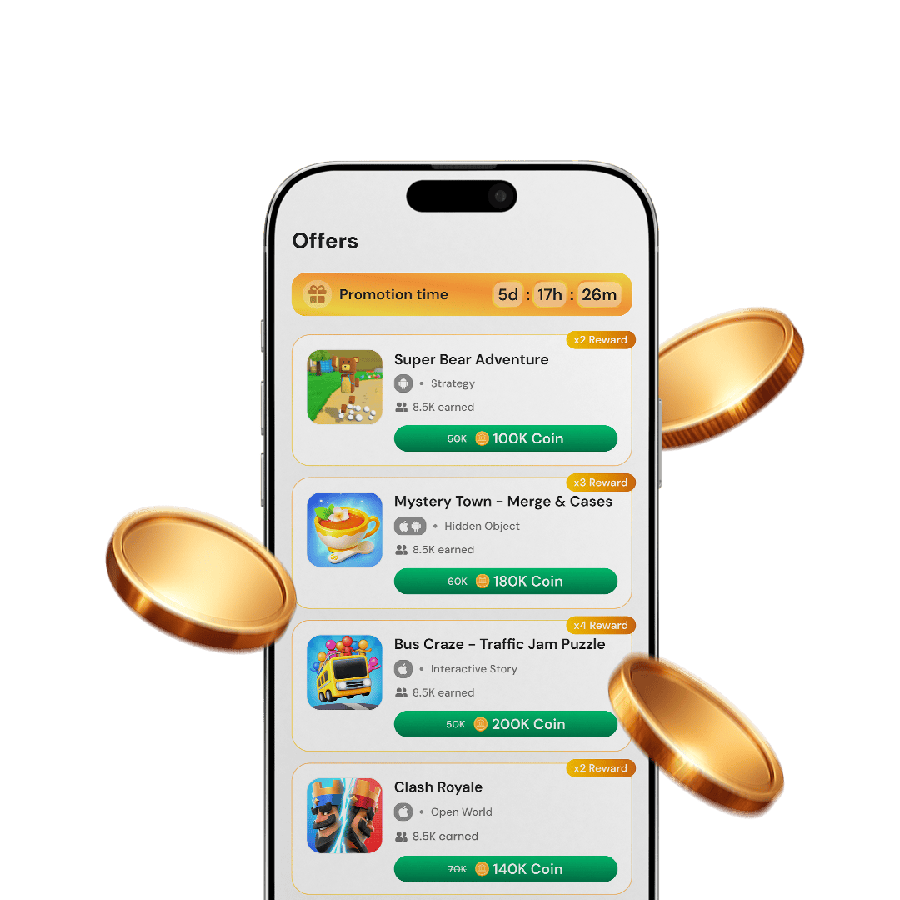
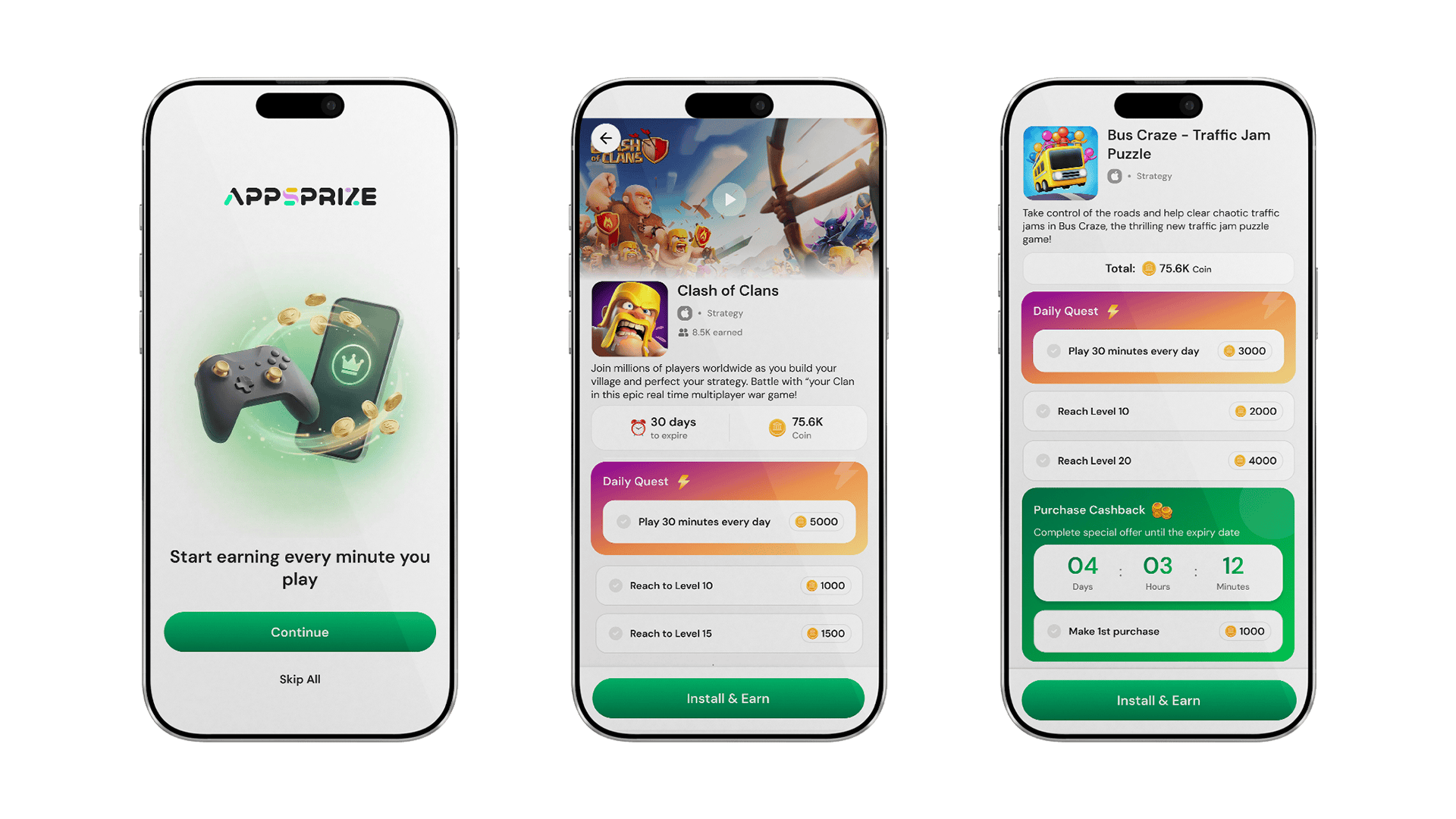
An in-game offerwall panel showing reward offers and premium currency

7.1 Inbound Economy Optimization

How It Works

You integrate a rewarded playtime offerwall directly into your game’s UI, typically accessible from a dedicated panel in the main hub or currency store. Active players open the panel, browse a curated list of partner apps or tasks (try this app for 10 minutes, reach level 5 in another game, complete a survey), and opt in on their own terms. When they complete a task, they receive your in-game premium currency as a reward.

The offerwall flow in action: a player opts in, browses partner-game offers with daily quests, and earns premium currency on completion
Why This Is a Monetization Strategy, Not Just an Ad Format

The offerwall operates differently from standard ad units. Rather than interrupting gameplay, it creates a voluntary, player-initiated economy where non-paying players can earn premium content through engagement. This achieves something few other monetization tools can: it converts the non-paying majority into active contributors to your revenue without charging them a cent.

Strategic Value at a Glance

Instead of disruptive video ads or a hard paywall, players earn your premium currency for free by completing partner tasks. It bridges non-payers to premium content and adds a diversified ad-revenue stream without hurting retention.

The Three-Way Value Exchange
StakeholderWhat They GiveWhat They Get
Your PlayerTime spent in a partner app or taskFree premium currency, with no purchase required
You (the Developer)Panel real estate in your UIAd revenue per completed task, improved retention, and non-payer monetization
Offerwall PartnerRevenue share per completed taskEngaged, motivated users who self-selected into the offer
Monetization Benefits for Casual & Hybrid Casual Games
  • Bridges non-payers to premium content: Players who would never make a direct purchase can now access premium tiers, boosters, or battle pass rewards through earned currency.
  • Diversifies ad revenue without disruption: Offerwall revenue is additive to your existing ad stack; it does not replace rewarded video but complements it.
  • Improves D7 and D30 retention: Players with an active currency-earning goal return more frequently to collect and spend their rewards.
  • Reduces paywall friction: A player who has earned 400 gems via the offerwall is far more likely to top up with a small IAP to reach a threshold than a player who has never engaged with premium currency.
  • No new creative assets required: Your Play Store listing, screenshots, and gameplay clips are enough for partners to list your game on their offerwalls in return.
Ryan Chadwick

Rewarded playtime is a great user acquisition source for Tripledot Studios and other ad-monetized publishers. Time-based incentives increase the number of ads watched per user, resulting in a win-win situation: more fulfilling gameplay for users and more ad revenue for publishers.

Ryan Chadwick, Senior Marketing Analyst at Tripledot Studios


08
8.0

Monetization Design Principles

The rules that keep revenue and player experience aligned

Four principles: build monetization in from day one, serve both player populations, balance experience against revenue, and localize your strategy.
Monetization design principles across casual and hybrid casual games

8.1 Build Monetization In From Day One

Monetization can’t be bolted on after a game is built. The game’s structure, difficulty curve, energy systems, meta layers, and content gates all depend on the monetization model chosen. Retroactively adding IAP to a game designed for pure ad monetization produces friction and poor conversion.

8.2 Monetize the Majority Without Alienating the Minority

Your stack serves two fundamentally different populations at once:

  • The 95% who will never pay: monetize via ads, but respect their experience; ad frequency caps and rewarded formats are essential.
  • The 5% who pay: offer an IAP experience that feels rewarding and fair; remove ads for subscribers or heavy spenders.

The most effective approach is progressive disclosure: new players see only rewarded video ads and gentle IAP prompts, with more monetization options introduced as engagement deepens, based on behavioral signals.

8.3 Balance Experience Against Revenue Extraction

Aggressive monetization that damages player experience is not a long-term strategy. The key principles:

  • Never gate mandatory progression behind hard paywalls in a casual game
  • Ensure IAP offers feel like genuine value, not desperation taxes
  • Cap ad frequency per session and per level
  • Reward players for engaging with ads. Never punish them for not watching
  • Build systems where non-paying players feel respected and included

8.4 Localize Your Monetization

A single global strategy doesn’t work. The key variables by market:

  • IAP price points: $2.99 in the US may be prohibitive in Southeast Asia; use regional pricing tiers
  • Ad sensitivity: some markets tolerate more ads than others; adjust frequency accordingly
  • Payment methods: local wallets, carrier billing, and alternative payment methods are critical in many markets
  • Event timing: seasonal events should align with local holidays and cultural moments

09
9.0

Key Metrics and Success Benchmarks

What to track from day one

Track these metrics from day one. They are the signal system for your monetization health.
Key monetization metrics and success benchmarks for mobile games
MetricDefinitionBenchmark (Casual / Hybrid Casual)
D1 Retention% of players returning the day after their first session35%+ = strong
D7 Retention% of players active 7 days after install10–15%+ = healthy
D30 Retention% of players active 30 days after install5–10%+ = monetization-ready
ARPDAUAverage revenue per daily active user (ads + IAP)Varies widely by genre; track the trend
IAP Conversion Rate% of players who make at least one purchase1–5% = normal range
LTVTotal revenue per user over their lifetimeTarget $1+ for sustainable UA
ROASReturn on ad spend from UA campaigns100%+ within 30–90 days
Ad ARPUAd revenue per user over a periodCompare to UA cost to assess profitability
Session LengthAverage time per game sessionCasual: 5–10 min; hybrid casual: 10–25 min

10
10.0

Key Takeaways

The bottom line for 2025–2026

The monetization landscape for casual and hybrid casual games in 2025–2026 is defined by depth, diversity, and data. Seven foundational principles:
1

Hybrid monetization is the standard, not the exception.

The most successful games combine ads, IAP, subscriptions, and battle passes. Each stream serves a different player segment. Relying on any single channel leaves significant revenue on the table.

2

Hybrid casual is the highest-growth genre in mobile gaming.

With 37% YoY IAP revenue growth in 2024 and sustained momentum in 2025, hybrid casual outperforms every other genre category on the revenue dimensions that matter most.

3

LiveOps is no longer optional.

84% of mobile IAP revenue in 2024 came from games with active LiveOps. The shift from launch-and-forget to launch-and-operate is complete: your revenue model must include a content operations strategy.

4

DTC is a genuine revenue opportunity, now.

Regulatory changes have opened the door. Early movers are seeing DTC account for 25–40% of total revenue. Even partial adoption dramatically improves margins by bypassing the 30% platform tax.

5

Retention is the precondition for monetization.

Downloads are declining. IAP is growing. The signal is unmistakable: the industry has shifted to maximizing LTV from existing players. Invest in retention mechanics before, during, and after launch.

6

Rewarded formats protect experience while driving revenue.

Rewarded video ads, rewarded playtime campaigns, and rewarded engagement campaigns consistently outperform interruptive formats on both revenue and retention metrics. Player-initiated monetization is the framework that scales.

7

Build monetization into your game architecture from day one.

Difficulty curves, energy systems, meta layers, and content gates are all monetization design. Games that treat monetization as a post-launch feature are structurally disadvantaged from the start.

AppSamurai for Games

Ready to Put This Playbook to Work?

Our growth team has scaled 500+ apps with rewarded UA, LiveOps-ready acquisition, and hybrid monetization strategy. Tell us about your game, and we’ll build the plan around it.

Talk to Our Growth Team →

Get the full Monetization Playbook